Website speed: why a PageSpeed score of 90+ matters for leads
Most people open a website on their phone, often on a weak connection. If the page loads slowly, they leave for a competitor without reading what you offer. Here is how that works and what to do about it.
What PageSpeed is
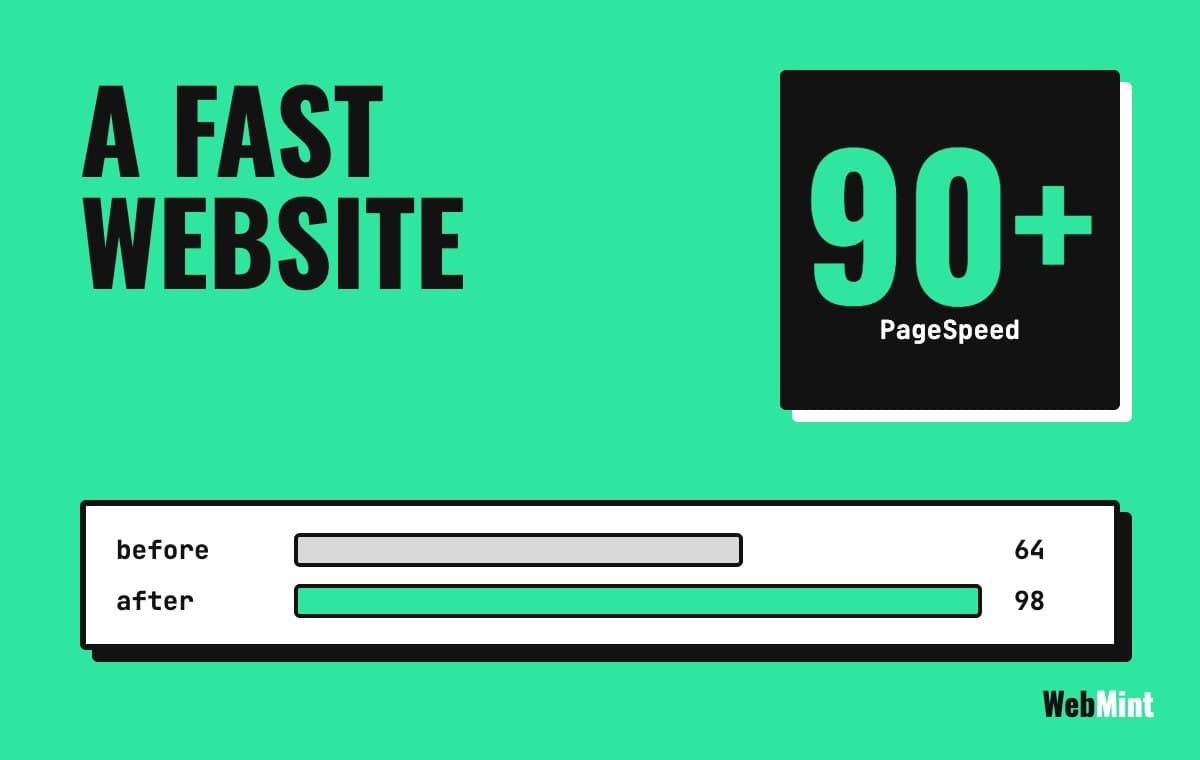
Google PageSpeed is a score from 0 to 100 that shows how fast a page opens and responds on mobile. 90 and above is considered good, below 50 is a problem.
The score depends on image weight, the number of fonts and scripts, and how the page loads.
Why it affects leads
People do not wait. If the first screen does not appear within a few seconds, they close the page and go back to search. You lose the customer before they see your prices or the request button.
A fast website is also easier to find on Google, because search engines take speed into account.
What slows a site down most often
Oversized images: a photo of several megabytes shown in a small window.
Extra fonts and scripts: several typefaces, chat widgets and analytics that load right away.
Heavy animations that strain a weak phone.
An example from practice
In a client mockup the home page first scored 64 on mobile. One logo image weighed 355 KB although it was shown at 78 pixels, and four font families were loading.
I compressed the images to their real size and kept only the fonts that were needed. The score became 98.
What I guarantee
A Google PageSpeed score of 90 or higher on mobile when the site is delivered. I check it before handover, and we look at the result together.
This applies to pages I build. Third-party widgets and scripts added at your request (chats, analytics) are not covered because they can slow the page down.
How to check your own site
Open pagespeed.web.dev, paste your site address and look at the mobile score. If it is below 70, speed is definitely worth improving, and people usually start with images.
Need a website for your business?
Tell me about the task and I'll suggest a solution and name the price.