Website warranty: what it covers and what it doesn't
“Warranty” sounds good, but without details it is just a word. Here is what it means in practice and what to clarify before signing.
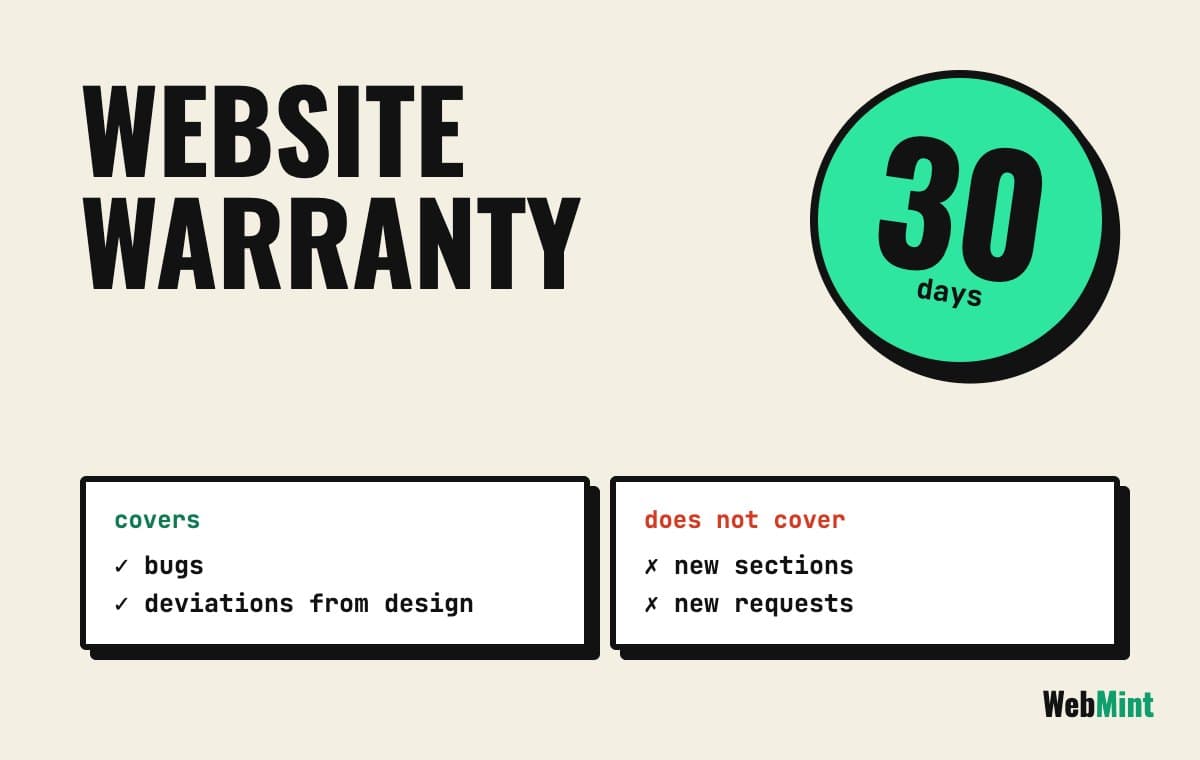
30 days for bugs
For 30 days after launch I fix bugs and deviations from the agreed functionality for free: a button does not work, the form does not send a request, a page breaks on a phone.
That is exactly what a warranty is for: so you are not left alone with whatever breaks after launch.
What it does not include
New edits or requests that were not in the agreement: another block, a new page, different colours, a new feature. That is separate work with its own price and timeline.
This is why the scope of work should be written in the contract: then it is clear where a bug ends and a new request begins.
What “fixed price” means
The amount in the contract does not change without your consent, even if the project turns out harder than it looked at the start.
Only what goes beyond the base scope is paid separately, and only after your yes. The domain, hosting and third-party services are named in advance.
Speed: what is guaranteed
I guarantee a Google PageSpeed score of 90 or higher on mobile when the site is delivered. We check it together before launch.
Third-party widgets and scripts added at your request (chats, analytics) are not covered by this guarantee: they can slow the page down.
How to check a warranty before signing
Ask for the contract to state the warranty period, what counts as a bug and what counts as a new request, and how to report an issue.
A warranty without these three points stays a promise. With them it works for you and for the contractor.
Need a website for your business?
Tell me about the task and I'll suggest a solution and name the price.